

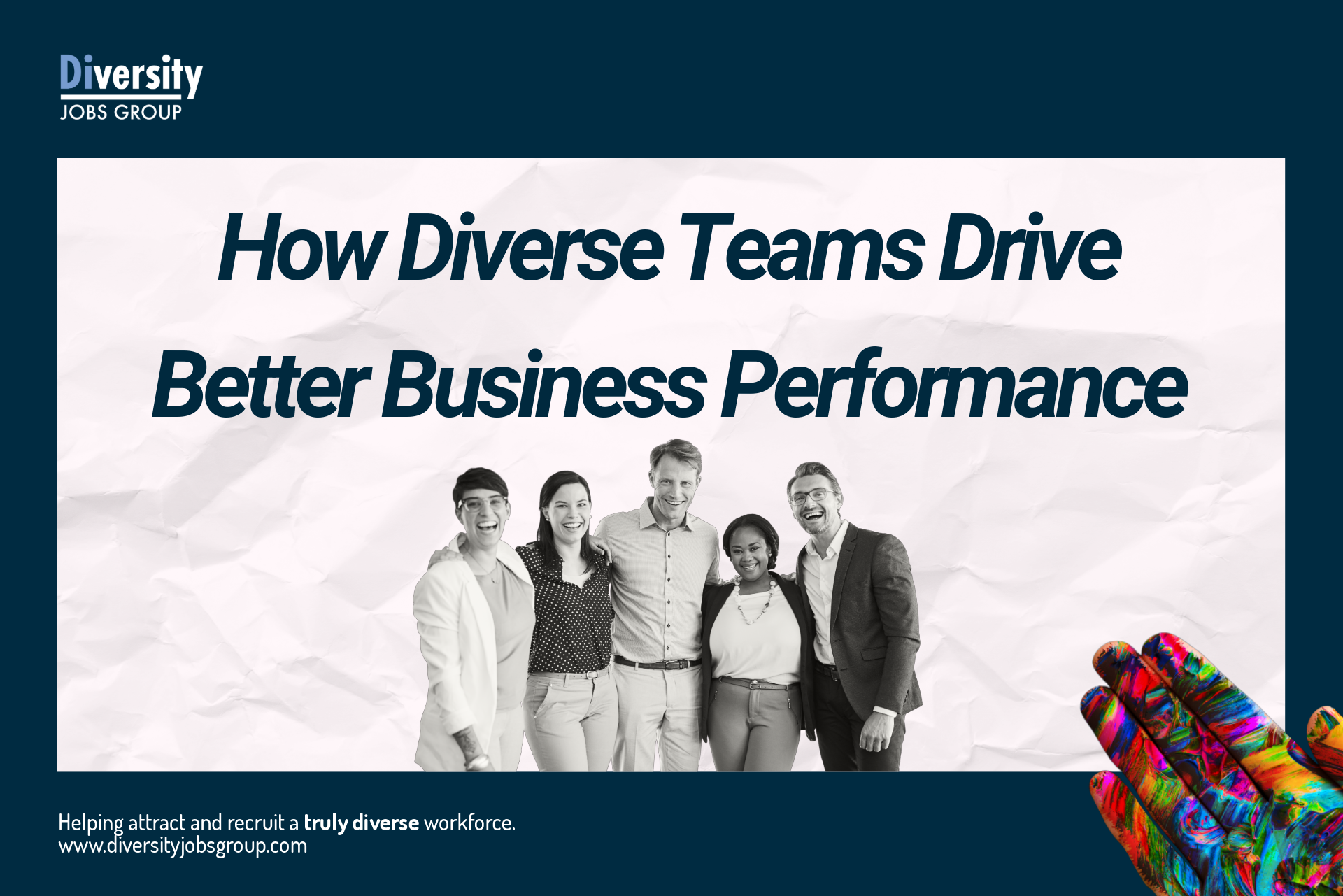
How Diverse Teams Drive Better Business Performance
In today’s rapidly evolving world of work, diversity is no longer a “nice to have”. Organisations that prioritise diversity, equity and inclusion (DEI) are not only creating fairer workplaces – they are consistently outperforming their competitors across innovation, productivity, decision-making and financial performance.
At Diversity Jobs Group, we work closely with employers and businesses who recognise that building diverse teams is essential to long-term success. But how exactly does diversity translate into better business outcomes? And what does meaningful diversity look like in practice?
What Do We Mean by Workplace Diversity?
Workplace diversity goes far beyond visible differences. While characteristics such as gender, ethnicity, age, disability and sexual orientation are critical, diversity also includes:
- Socio-economic background
- Education and career pathways
- Neurodiversity
- Cultural experiences
- Thinking styles and perspectives
When organisations embrace diversity in its broadest sense, they unlock a wider range of ideas, approaches and lived experiences.
Diverse Teams Make Better Decisions
One of the most well-documented benefits of diverse teams is improved decision-making. When people with different perspectives come together, they challenge assumptions, spot opportunities and reduce the risk of mistakes.
Homogeneous teams may reach consensus quickly, but that speed often comes at the cost of quality. Diverse teams, by contrast, are more likely to:
- Question existing processes
- Evaluate risks more thoroughly
- Consider a broader range of outcomes
Research consistently shows that diverse groups make more accurate decisions than uniform ones, particularly in complex or uncertain environments. In a business landscape shaped by rapid change, this ability to think critically and adapt is invaluable.
Better Understanding of Customers and Markets
Today’s customers are more diverse than ever. Businesses that fail to reflect this diversity internally risk misunderstanding or overlooking large segments of their audience.
A diverse workforce helps organisations:
- Understand the needs of different communities
- Design inclusive products and services
- Communicate more authentically with varied audiences
Employees who bring lived experience and cultural insight can highlight issues others may miss, from accessibility barriers to nuances in language or cultural sensitivities. This leads to stronger customer relationships and increased brand trust.
Improved Financial Performance
The link between diversity and financial performance is now well established. Numerous studies have found that organisations with diverse leadership and inclusive cultures are more likely to outperform their peers on profitability and growth.
This is not a coincidence. Diverse teams drive financial success by:
- Making better strategic decisions
- Innovating more effectively
- Reducing costly mistakes and reputational risks
- Attracting and retaining top talent
When diversity is embedded into business strategy rather than treated as a box-ticking exercise, the commercial benefits follow.
Higher Employee Engagement and Retention
Inclusive workplaces are better places to work. Employees who feel valued, respected and able to be themselves at work are more engaged and motivated.
Diverse and inclusive organisations typically see:
- Higher levels of employee satisfaction
- Lower staff turnover
- Stronger collaboration and morale
When employees feel they belong, they are more likely to contribute fully, share ideas and commit to the organisation’s success. This not only improves performance but also reduces the significant costs associated with recruitment and attrition.
Stronger Employer Brand and Talent Attraction
In an increasingly competitive market, candidates are paying close attention to employer values. Diversity and inclusion play a major role in how organisations are perceived.
Employers that demonstrate a genuine commitment to diversity are more attractive to:
- Early-career talent
- Underrepresented groups
- Candidates seeking purpose-driven organisations
Showcasing inclusive hiring practices and diverse role models signals that opportunities are accessible to all. This widens the talent pool and helps businesses attract candidates with the skills and perspectives they need to grow.
Embedding Diversity into Business Strategy
For diversity to drive performance, it must be embedded into the foundations of the business. This includes:
- Inclusive recruitment and promotion practices
- Fair pay and progression frameworks
- Flexible working and accessibility
- Ongoing education and accountability
Tracking diversity metrics alongside business outcomes helps organisations understand what is working and where improvement is needed.
Diversity is not a trend or a compliance exercise.
Diversity is a proven driver of better business performance. Organisations that invest in diverse teams and inclusive cultures are more innovative, more resilient and better equipped to succeed in a complex world.
At Diversity Jobs Group, we believe that inclusive recruitment is the foundation of strong, future-focused organisations. By connecting employers with diverse talent and promoting inclusive hiring practices, we help businesses unlock the full potential of their workforce.
www.diversityjobsgroup.com